Sensitive & Reactive Skin
7 products


7 products
Redness & Stressed Skin
Skin that reddens with stress, weather or nothing identifiable. Not necessarily rosacea, but it needs the same biological precision, and it does not respond to being soothed alone.
Start by removing fragrance, then calming. Subtraction does more here than addition, and it costs nothing. The full mapping is below the products.
Redness that keeps returning is usually a structural deficit rather than a sensitivity trait. Soothing manages the episode; structure changes the threshold.
A compromised barrier lets inputs reach nerve endings that an intact one would block. That is why things tolerated for years suddenly sting.
Cortisol triggers inflammatory signalling in skin directly, which is why stress produces visible redness with no topical trigger at all.
Vessels dilate readily and take longer to return to baseline, so each episode lasts longer than the trigger that caused it.
Each flare causes micro-inflammation that further weakens the barrier, which lowers the threshold for the next one. Breaking that loop needs both halves addressed.
Match what you are noticing to one starting point. Adding several calming products at once makes the trigger impossible to identify.
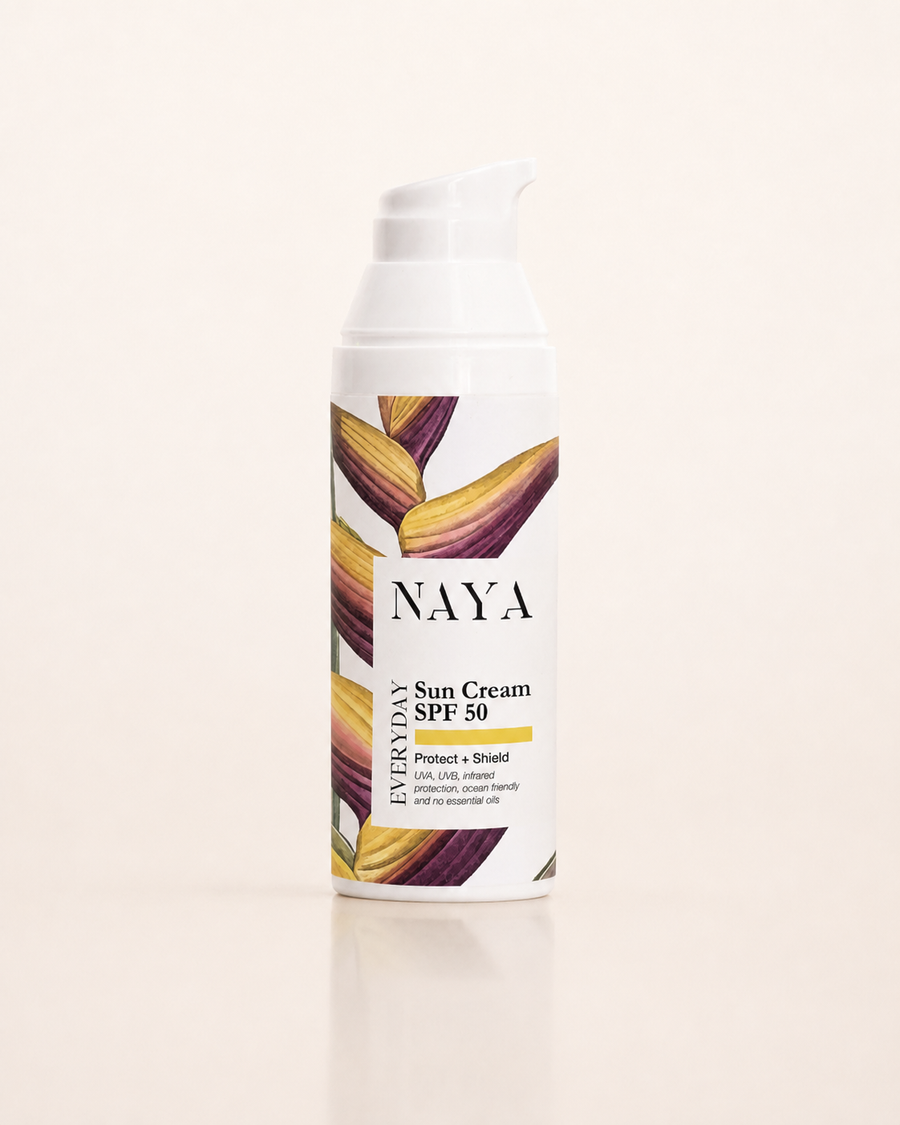
Across every starting point, one step does not change: Everyday Sun Cream, every morning. UV is the fastest way to undo what the rest of the routine builds.
The mistake is adding more soothing products. Soothing reduces the episode. Only structure changes how easily the next one starts.
Fragrance and essential oils out of every leave-on product. A non-stripping cleanser, calming support twice daily, sun protection. Actives paused entirely.
Add the structural and overnight steps. Ectoin builds cumulative tolerance over four to six weeks, so consistency matters more here than in any other routine.
Actives become possible again on a barrier that can process them. Introduce one, at low frequency, and wait.
This routine in trial sizes. Ectoin settles reactivity from the first applications, and builds cumulative tolerance over four to six weeks of consistent use. This set is where you feel the first and decide whether to stay for the second.
Add to cartSun cream is not included. At the amount you should actually be using, a trial size empties in under two weeks, so it cannot tell you anything useful about the one product you will use most.
Not necessarily. Rosacea involves persistent redness, visible capillaries or raised bumps. If that describes yours, the rosacea range is the better fit. This range is for the broader reactivity spectrum without a diagnosis.
Because soothing manages the episode without changing how easily the next one starts. The threshold is set by barrier structure, which is why this range pairs calming with rebuilding.
On reactive skin, often yes. Removing fragrance from every leave-on product frequently produces more improvement than adding any calming active, and it costs nothing to try.
Stinging usually settles within a week. Episodes shorten over two to four weeks. Baseline redness reduces around week six, and it is cumulative from there.