Hyaluronic Acid
4 products


4 products
All the way down to the tiniest molecules. Because it’s these that are responsible for bringing valuable moisture into your skin, holding it there, and providing long-lasting hydration. When your skin is plump with moisture, fine lines and wrinkles are plumped up, redness is reduced, and dryness is balanced. Want to know more? Then keep reading!
Hyaluronic acid belongs to the polysaccharides and is composed of a long chain of repeating disaccharide building blocks. A single hyaluronic acid chain can consist of up to 50,000 of these building blocks. The individual chains attract each other, forming a dense network. Like a sponge, hyaluronic acid can bind and store large amounts of water.
Our body utilizes this property to produce hyaluronic acid and apply it precisely where water retention is needed, such as in the eyes or joints. However, it is mostly found in the intercellular spaces of the skin. Here, it forms a gel-like matrix in the dermis, where collagen fibers and fibroblasts are embedded. Together with these proteins, hyaluronic acid is responsible for the skin's structure and elasticity.

Hyaluronic acid hydrates your skin even in its deeper layers, storing water in so-called moisture reservoirs. This is why the skin appears plump and smooth. With optimal hydration, cells can be supplied with essential nutrients and waste products are efficiently removed. This is also why hyaluronic acid has anti-inflammatory properties and helps prevent blemishes. Additionally, these moisture reservoirs act like a natural shield, making your skin more resilient to external influences such as UV radiation, environmental toxins, and mechanical stress.
When applied, hyaluronic acid is absorbed into the upper skin layers, providing moisture to the skin. Your complexion gains volume, appears firmer, and wrinkles are reduced. However, not all hyaluronic acid is the same, as it differs in molecular size. Long-chain hyaluronic acids (1500 kD) form a moisturizing film on the skin's surface. This prevents the rapid evaporation of the skin's own water and increases hydration. Short-chain hyaluronic acids (50 kD) and oligohyaluronic acids (3 kD) are stored long-term in the connective tissue, ensuring sustained moisture supply.
Due to its intricate, chain-like structure, hyaluronic acid transports valuable moisture into the deeper layers of your skin.
Like a sponge, hyaluronic acid can bind large amounts of water and store it in its moisture reservoirs.
The moisture reservoirs act as a natural shield, making your skin more resilient and keeping it intact.
Hyaluronic acid is absorbed into the upper skin layers, giving your skin more volume, making it firmer, and reducing wrinkles.
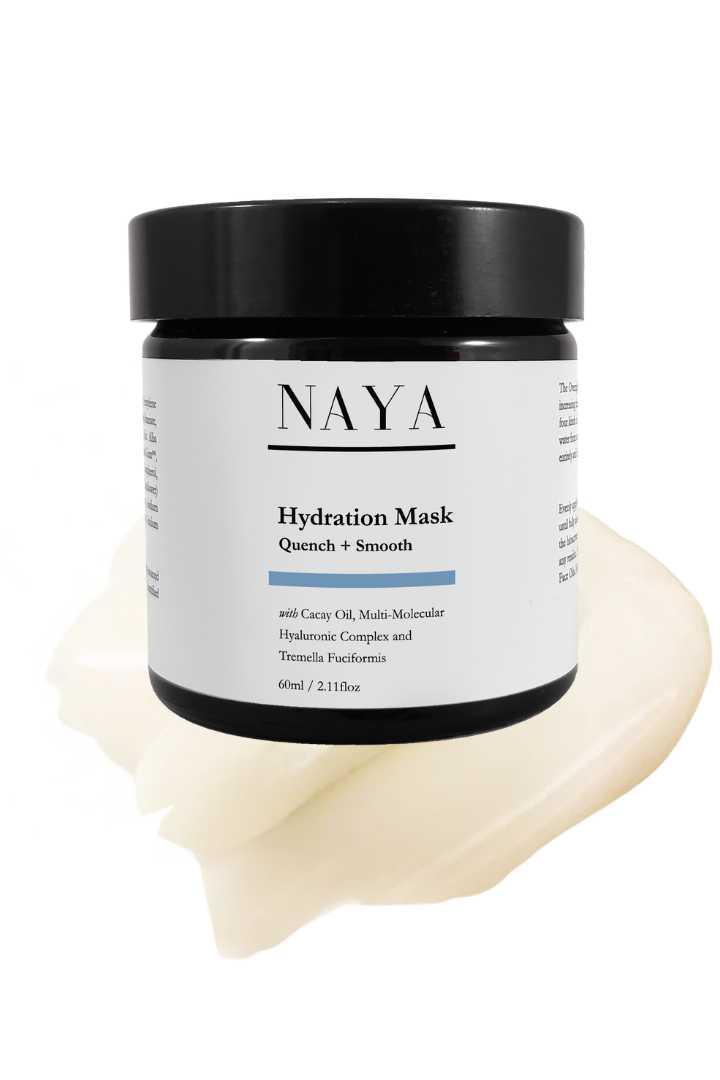
Silver Ear Mushroom (Tremella fuciformis) is a natural ingredient that also hydrates the skin but works differently from hyaluronic acid. Known for its unique ability to bind water, Silver Ear Mushroom contains polysaccharides similar to hyaluronic acid but with a different molecular structure. Some studies suggest that it can help to hydrate and plump the skin, but it also offers additional benefits such as boosting the skin's natural collagen production and providing antioxidant protection. While hyaluronic acid's moisture-retaining ability is well documented, Silver Ear Mushroom's effects on skin hydration and anti-aging are still being researched, with emerging evidence supporting its use for brighter, more even-toned skin.
Both ingredients are known for their ability to enhance skin hydration and promote a healthy, youthful appearance, but they achieve these effects through slightly different mechanisms.

Cell Resilience Pre-Serum
Hydration is more than a quick surface boost. Cell Resilience Pre-Serum combines a multi-level hyaluronic complex and Tremella with peptides and antioxidant enzymes to help skin retain moisture and feel more resilient.
Its lightweight texture fits comfortably beneath your treatment serum or moisturiser. Apply after cleansing in the morning and evening, then follow with the care your skin needs.
Compatibility & Interactions
Hyaluronic acid is beneficial for all skin types because it helps your skin absorb and retain moisture. It is so compatible with the skin that you can easily combine it with other active ingredients. In doing so, it helps transport these ingredients deeper into the skin, thereby enhancing their effectiveness.


Hyaluronic acid is produced through bacterial fermentation, with wheat being the starting material for the fermentation process. The substance is purified through several filtration steps and then dried. Fermentation generally refers to the conversion of organic substances through the addition of microorganisms or enzymes.