Pigmentation & Uneven Tone
9 products


9 products
Pigmentation & uneven tone
Pigmentation is not simply colour sitting on the surface. UV exposure, inflammation, hormonal signalling, irritation and skin renewal can all influence how uneven tone develops, persists and returns.
Find your starting point
01 · Find where you are
Pigmentation does not always begin in the same way. Start by recognising the pattern before deciding how aggressively to correct it.
Smaller, more defined brown marks that become more noticeable after cumulative light exposure.
Flat discolouration left after blemishes, irritation or inflammation.
Diffuse or recurring pigmentation, including melasma, often influenced by hormones, UV and heat.
Uneven-looking colour where texture, slower renewal and reduced clarity may also be contributing.
Free 4-day training
Four short lessons designed to help you understand why pigmentation persists, why more treatment is not always better, and how to choose a calmer route for your skin.
02 · What actually drives pigmentation?
Different signals can contribute at different points in the process.
03 · Why more is not always better
The goal is not to attack pigmentation harder. It is to reduce the signals that keep asking skin to produce it.
04 · Multiple pathways
A system approach can support several parts of the process without turning your routine into a stack of aggressive corrective treatments.

Where Radiance Reborn can fit
A targeted evening option when retinal is appropriate and pigmentation or uneven tone is the priority. It is not automatically the right starting point for every skin state.
Go deeper
The Hub gives you the map. These articles go deeper into the biology and ingredient evidence.
Pigmentation guide · approx. 9 min
How pigmentation forms, the melanogenesis pathway, prevention, treatment options and what realistic progress looks like.
Pigmentation myth · Vitamin C
Where Vitamin C can support brightening, why stubborn pigmentation needs more than one pathway, and what a more targeted strategy looks like.

05 · Protecting progress
Fading existing pigment is only half the job. The other half is reducing repeated UV signalling. Daily sunscreen helps protect the progress the rest of your routine is trying to create.
06 · Choose your path
Reactivity changes the route. It does not create a new pigmentation category.
Targeted evening correction for pigmentation and uneven tone.
Gentler daily brightening support for clarity and more even-looking tone.
Prepare and support resilience before escalating correction.
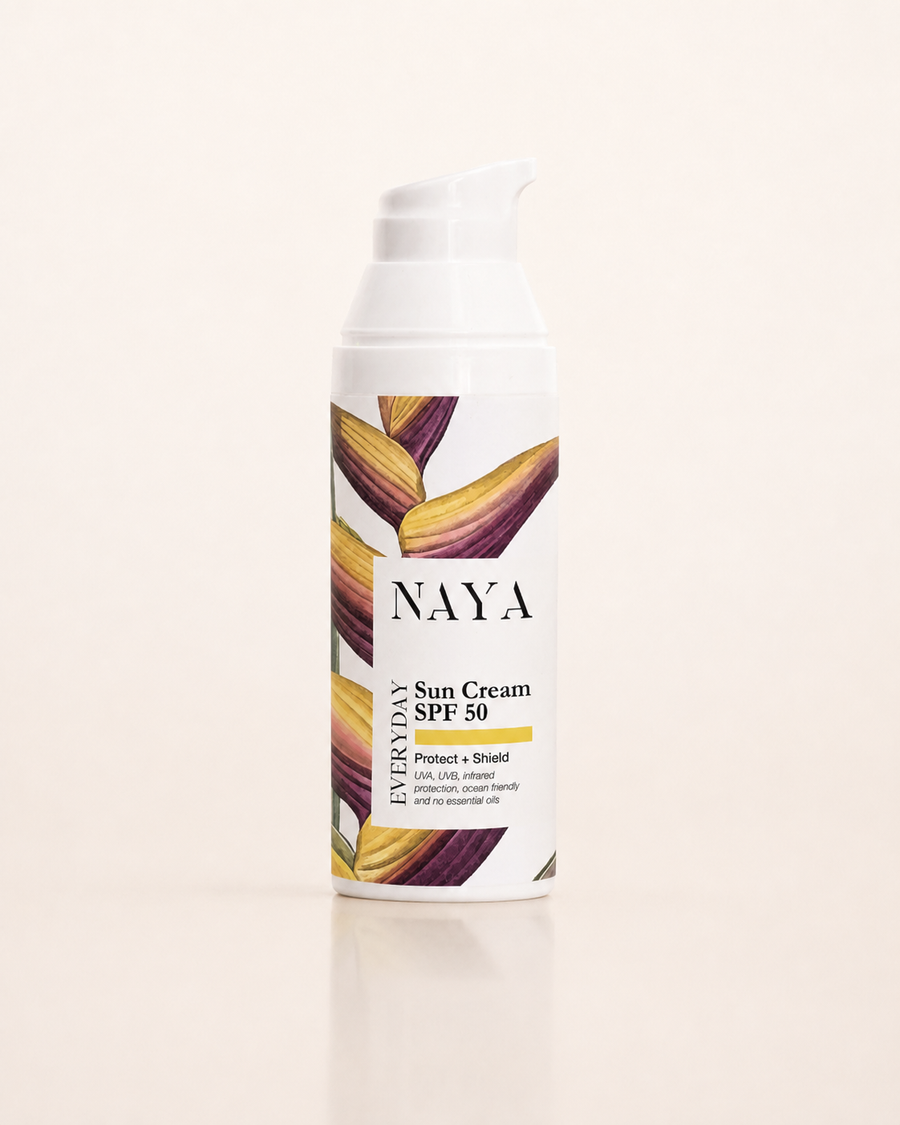
The protection step that helps defend the progress created elsewhere in the routine.
You do not need all of these.
Prefer to browse the complete pigmentation and uneven-tone edit?
Explore the Pigmentation & Uneven Tone collection07 · What progress can look like
Focus on tolerance and consistency. Avoid introducing several corrective changes at once.
Contrast may gradually soften. Overall tone and texture may begin to look more even.
Assess whether the direction is genuinely improving and whether your routine remains comfortable.
If a mark is new, changing, raised, irregular, bleeding or concerns you, have it assessed by a medical professional rather than trying to treat it with skincare.
Still not sure where to start?
Use the NAYA Skin Quiz for a more personalised starting point, or join the free 4-day Pigmentation Training if you want to understand the biology first.