
Mini | RosēaCalm Cream - 5ml

Mini | RosēaCalm Cream - 5ml

Mini | RosēaCalm Cream - 5ml

Regular price €10,00
/

RELIEVE + CALM

Size
Tax included. Shipping calculated at checkout.
Estimated delivery: 1–3 business days within DE

Soothe • Reduce redness • Strengthen

Best for: rosacea-prone, chronically flushed or fragile skin

Not ideal for: those without redness concerns seeking active correction

Routine step: Restore (Step 4 of 5)

NOTE:

Many skincare products on the market now contain high concentrations of niacinamide. If you’re using RoseaCalm, we recommend not combining it with additional niacinamide-based products—especially if you have sensitive or reactive skin.

While niacinamide is a beneficial ingredient, too much can lead to flushing, redness, or irritation, and may have the opposite of its intended calming effect.

As with many things in skincare:

A good thing is only good in the right amount.

Mini | RosēaCalm Cream - 5ml
SKIN SCIENCE

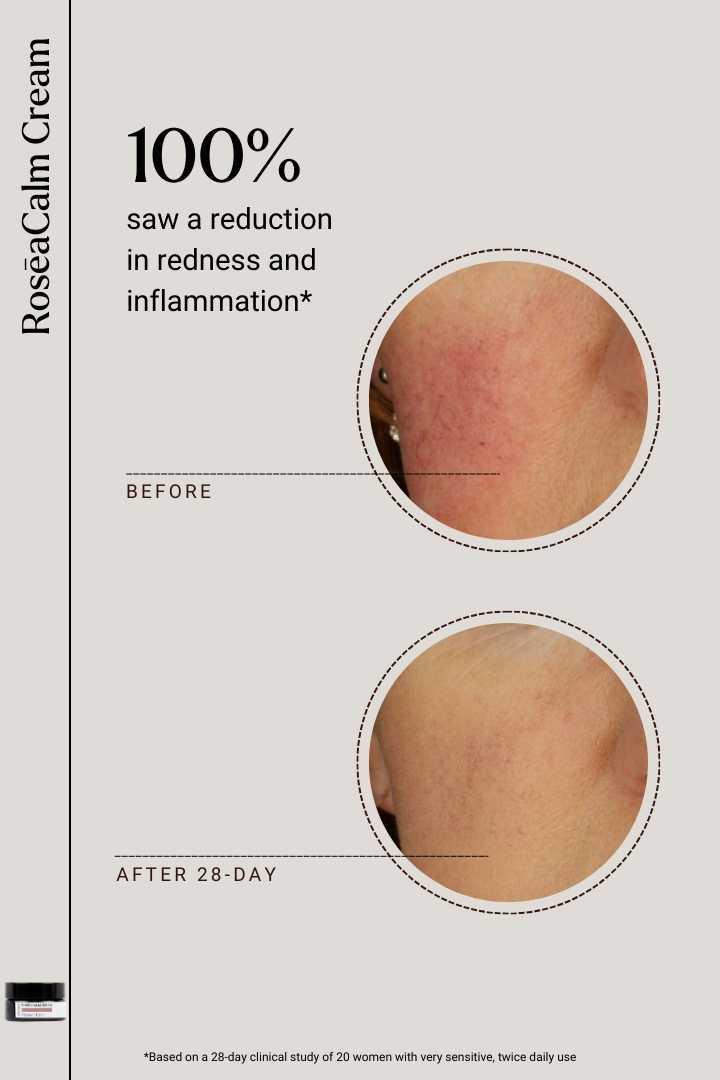
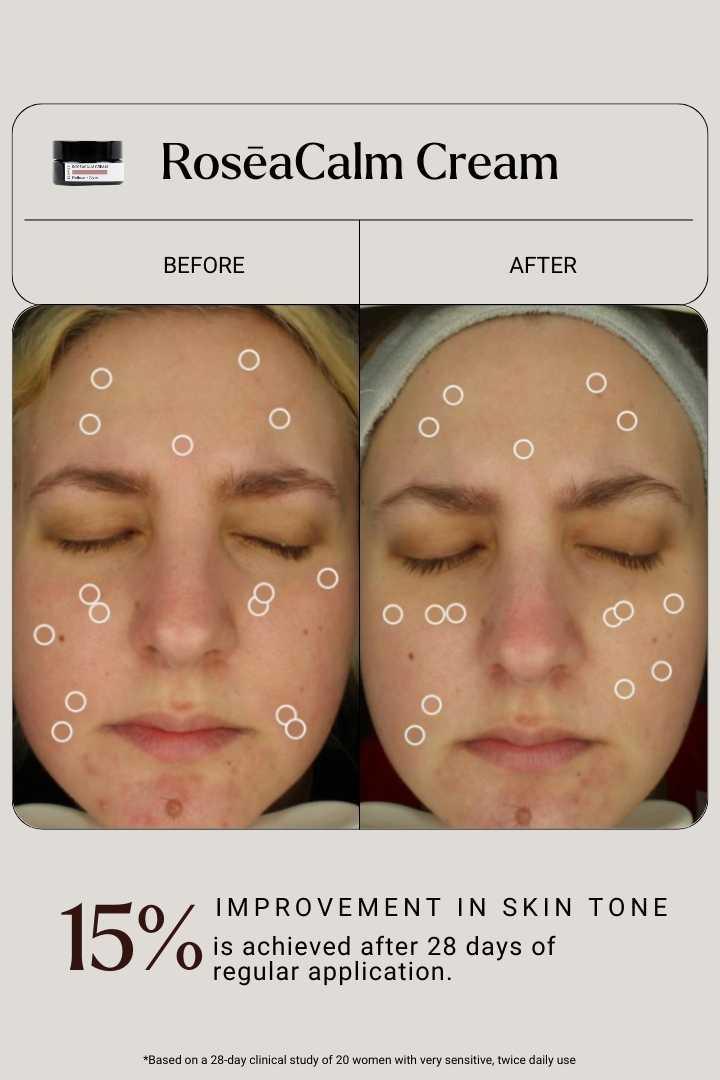
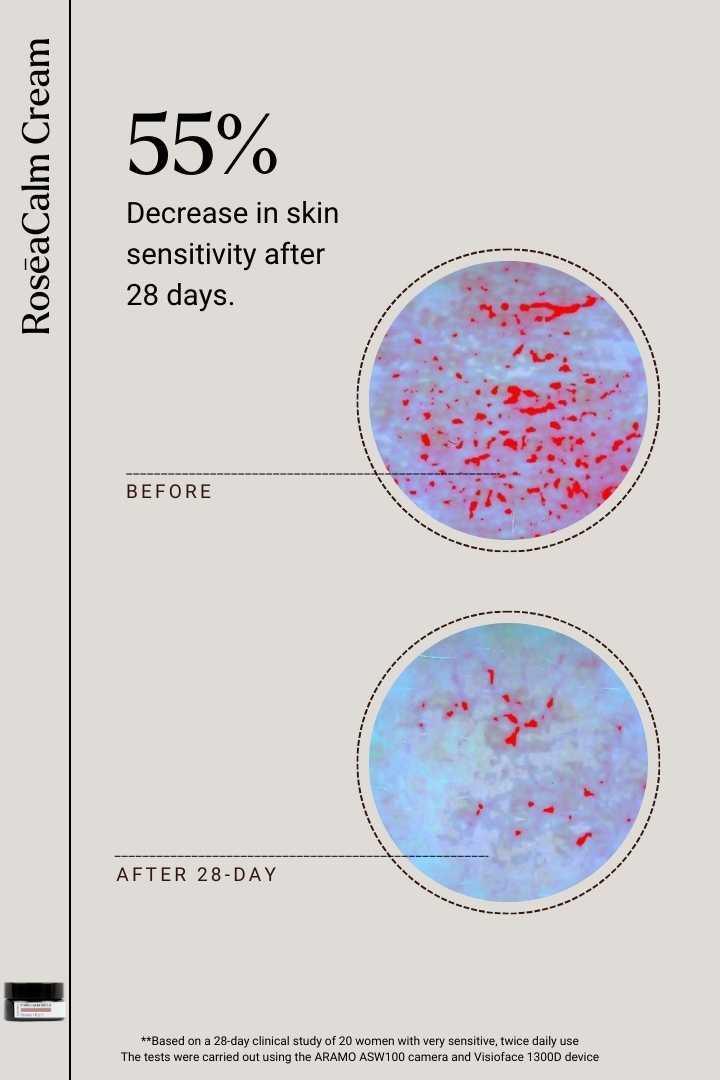
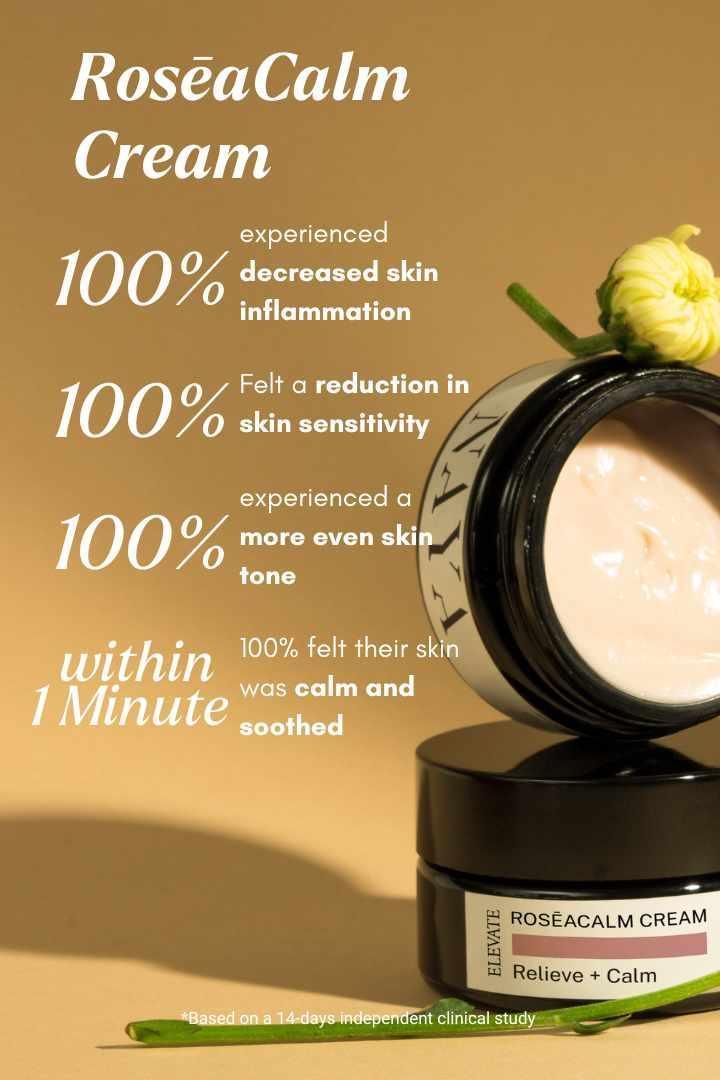
CLINICAL RESULTS

100%
experienced a more even & calmer skin tone
within one minute
100% felt their skin was calm and soothed
100%
experienced decreased skin inflammation
*Based on a consumer perception study.

RosēaCalm Cream

HOW TO USE

WHAT IT IS

This section doesn’t currently include any content. Add content to this section using the sidebar.

Our Ultra-Clean Standard

We go beyond the highest European standards, removing 2,200 harmful ingredients to ensure the purest, safest formulas for your skin.

Craftsmanship

Any questions? Let us answer them

Absolutely. Yes you can.

Please take the product to your next doctor's appointment and follow your doctor's recommendation.

If you experience any discomfort or doubt while using the product, you should stop using it immediately.

Ideally not, as makeup can indeed trigger or worsen rosacea symptoms. Here’s why it happens and how to minimize the risk:

Why Makeup Triggers Rosacea:

1. Irritating Ingredients: Ingredients like alcohol, fragrance, menthol, and essential oils can irritate sensitive skin and cause flare-ups.

2. Heavy Formulas: Thick, occlusive makeup can trap heat and bacteria, exacerbating redness and inflammation.

3. Preservatives: Parabens and formaldehyde-releasing preservatives can further irritate rosacea-prone skin.

4. Physical Friction: Applying makeup with rough brushes or rubbing the skin too hard can aggravate symptoms.

5. Clogging Pores: Comedogenic ingredients can block pores, leading to breakouts and irritation.

Suggestion:

To calm your skin and manage the signs of rosacea, use RosēaCalm on its own rather than in combination with makeup. Apply RosēaCalm after your cleansing step on slightly damp skin. Alternatively, you can use it in combination with Aura Essence for enhanced skin comfort and hydration.

Our products are formulated to support your skin health and should not cause pilling on their own. However, in combination with certain makeup products as well as less superior skincare products, especially those with incompatible ingredients, pilling may occur. This is typically caused by the makeup itself, not our skincare.

Some makeup or even skincare formulas, especially those containing silicone-based ingredients, can cause pilling when layered over skincare products. Makeup formulas can sometimes be notoriously poorly formulated, and this can trigger pilling of our products, especially if the makeup contains:

1. Silicone-based ingredients (e.g., Dimethicone, Cyclopentasiloxane, etc.): These are often used in makeup for a smooth finish but can sometimes cause pilling when layered over skincare with certain oils or active ingredients.

2. Glycerin: While glycerin itself is a humectant that attracts moisture and generally doesn’t cause pilling, if it’s not properly absorbed before makeup application, it can contribute to pilling, especially when mixed with heavier emollients or thickeners.

3. Squalane: While generally well-tolerated, squalane can cause pilling when combined with certain makeup products, especially if too much product is applied or the makeup doesn’t allow for proper absorption.

4. Polyglyceryl-3 Polyricinoleate & Polyglyceryl-3 Diisostearate: These emulsifiers are used to help blend ingredients together but can sometimes lead to pilling when an incompatible makeup product is applied on top.

5. Zinc Oxide: Commonly used in sunscreens, zinc oxide may contribute to pilling if not allowed to fully absorb into the skin before applying makeup.

6. Magnesium Sulfate & Sodium Benzoate: These stabilizers and preservatives generally don’t cause pilling but may interact with certain makeup products to create this effect.


This is by all means not a complete list but a starting point.

To avoid pilling, we suggest allowing each product to fully absorb and ideally avoiding using make-up.

Ratings & Reviews

30+ awards received within 3 years

Attracta Winner Badge Aura Essence
Award-winning Beauty Shortlist Awards 2022 Badge
Award-winning Lux Life Badge
Global Green Beauty Award Winning 2021
Award-winning Beauty Shortlist Awards 2020 Badge
Veggie Award Winning 2020
Recently viewed